Short version: a spec home is a house we build before there is a buyer. That means we carry the risk, so every decision has to make sense to the family who will walk through it later. Here is how we do it in Greater New Orleans, written from the job site, not from a brochure.
1. It starts with the lot, not the floor plan
We look for a lot at a fair price in a neighborhood where people already want to live and where homes sell. We check the schools in that ZIP code too: good schools are one of the clearest signs that families want to be there. A beautiful house on the wrong block is still a hard sale. If the location is not right, we walk away, no matter how cheap the lot is.
Before we buy, we also walk the lot and look at the trees and vegetation, especially where the footprint of the house will go. If the lot is priced at market and it has a lot of trees to clear, we negotiate: either the owner takes around $3,000 off the price, or the owner removes the trees and has the stumps ground out before we close. Clearing a lot is real money, and it should come out of the price, not out of the house. The same goes for an old slab or driveway left on the lot: it has to come out before the pilings can go in, and we count it before we buy.
2. We run the numbers before we draw anything
Before we buy, we study the market around the lot. The key number is what new construction sells for per square foot in that area, not old houses, which sell for less. Then we look for the sweet spot in size. In many neighborhoods, buyers pay well for a new home up to a certain size, and above it the price per foot stops climbing. If that ceiling is about 2,400 square feet, we design at or under 2,400. Building bigger than the street supports is the most common way a spec home loses money.
The third number is days on market: how long homes in that area take to sell. It matters as much as the price. A neighborhood where new houses sell in a few weeks is a very different bet from one where they sit for months, because every extra month the house waits is money.
3. Permits and every inspection, by the book
Once the numbers work, we buy the lot, pull the permits and build with the city’s inspections at every stage: foundation, framing, electrical, plumbing, mechanical and final. Before anyone digs, we call Louisiana 811 so every buried gas, power and water line on the lot gets marked. Driving a piling into a gas line or a power line is dangerous, and that call is never skipped. Nothing gets covered up before it passes. That paper trail matters to the buyer, to the lender and to the appraiser.
4. Raised on pilings, at least 12 inches above the flood line
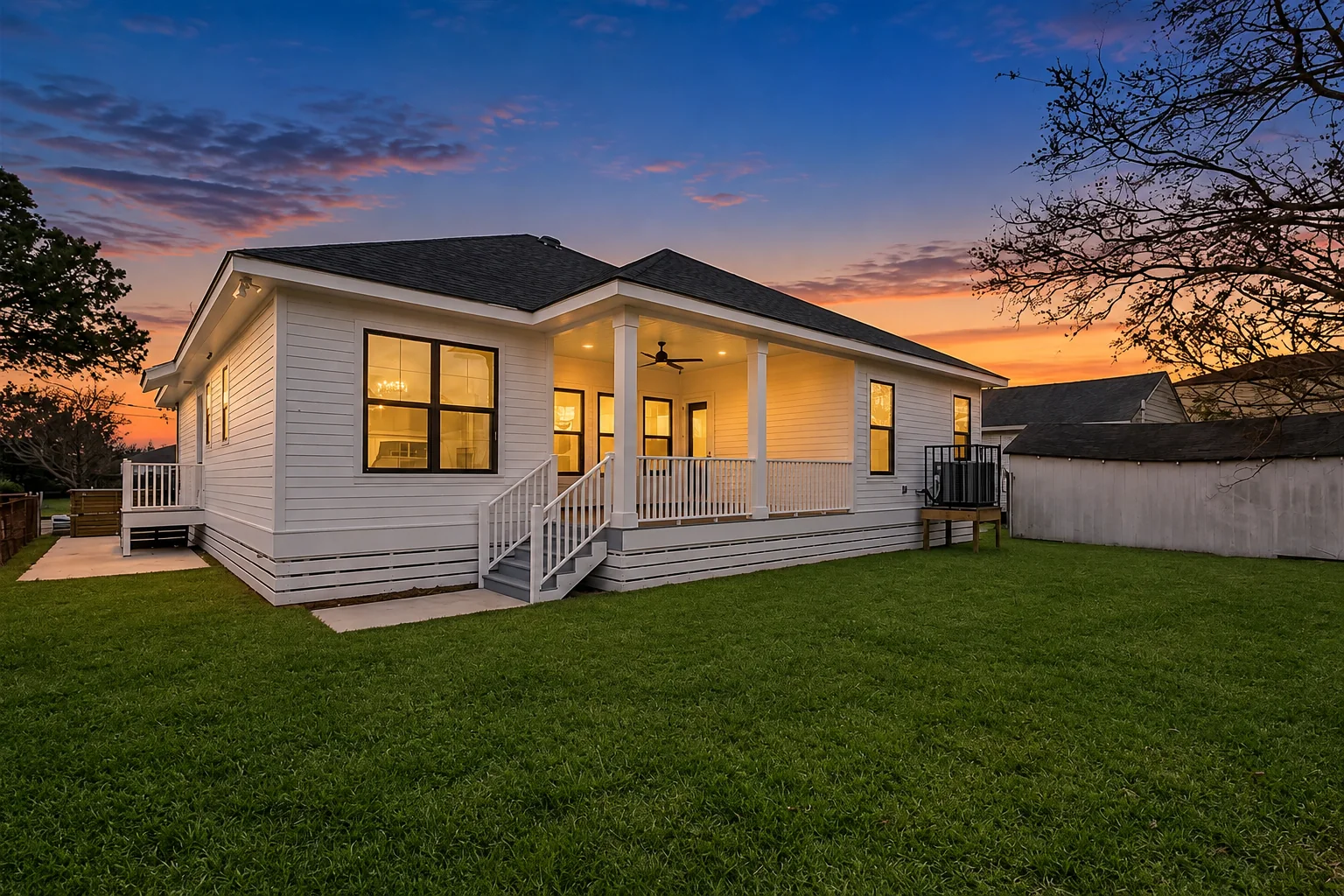
In New Orleans, flood elevation is not a detail. Our homes are not built on a slab. They are raised houses on pilings, because of the base flood elevation. We set the finished floor at least 12 inches above the required flood elevation for the lot, confirmed by the surveyor. That extra height protects the house and helps the next owner with the cost of flood insurance, one of the first questions a buyer’s agent asks.
After the pilings go in, we bring in fill: at least three loads of sand inside the footprint of the house. That raises the ground under the house above the front, side and back yards, so when it rains the water drains away instead of sitting under the house. Standing water under a raised house means moisture, and moisture means mold. The fill is there to keep the house dry from the ground up.
Because a raised house sits off the ground, we also insulate under the house. The floors stay comfortable in winter and the air conditioning works less in summer.
5. Materials a buyer can feel
A spec home is judged in the first five minutes of a showing, so the finishes have to be right:
- Fiber-cement siding outside, most often James Hardie: it stands up to humidity, heat and termites far better than wood.
- Tile to the ceiling in every shower and over every tub, and a glass enclosure on every walk-in shower, not a curtain rod. Faucets and shower fixtures are Delta.
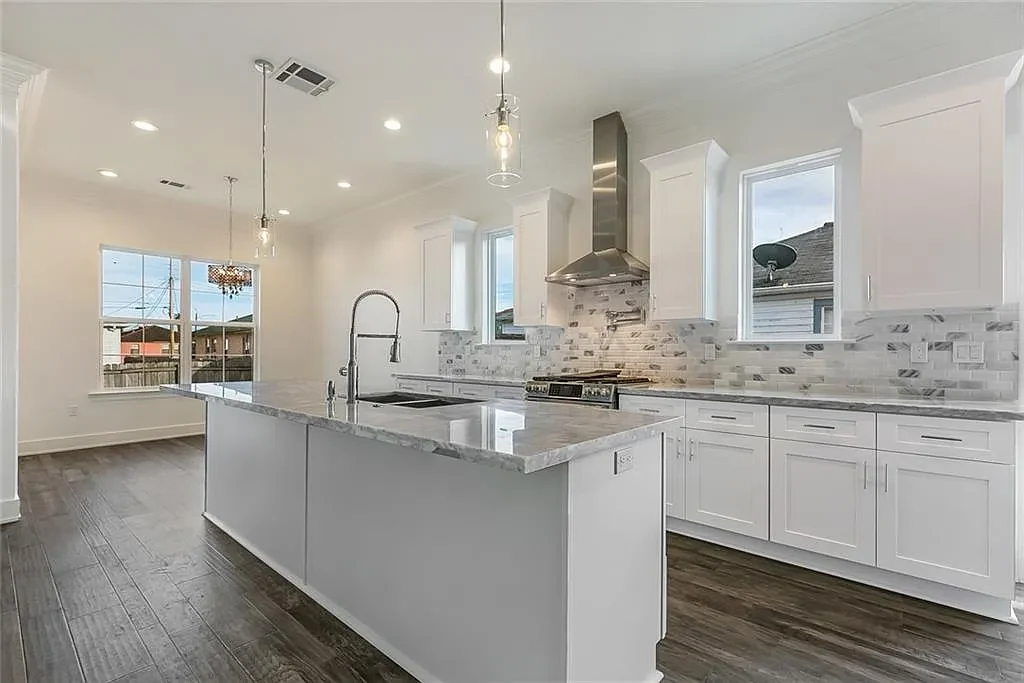
- A modern kitchen with modern wood cabinets, a large island, quartz countertops and stainless appliances, because the kitchen sells the house.
- Luxury vinyl flooring: it looks like wood, handles New Orleans humidity and stands up to kids, pets and daily life.
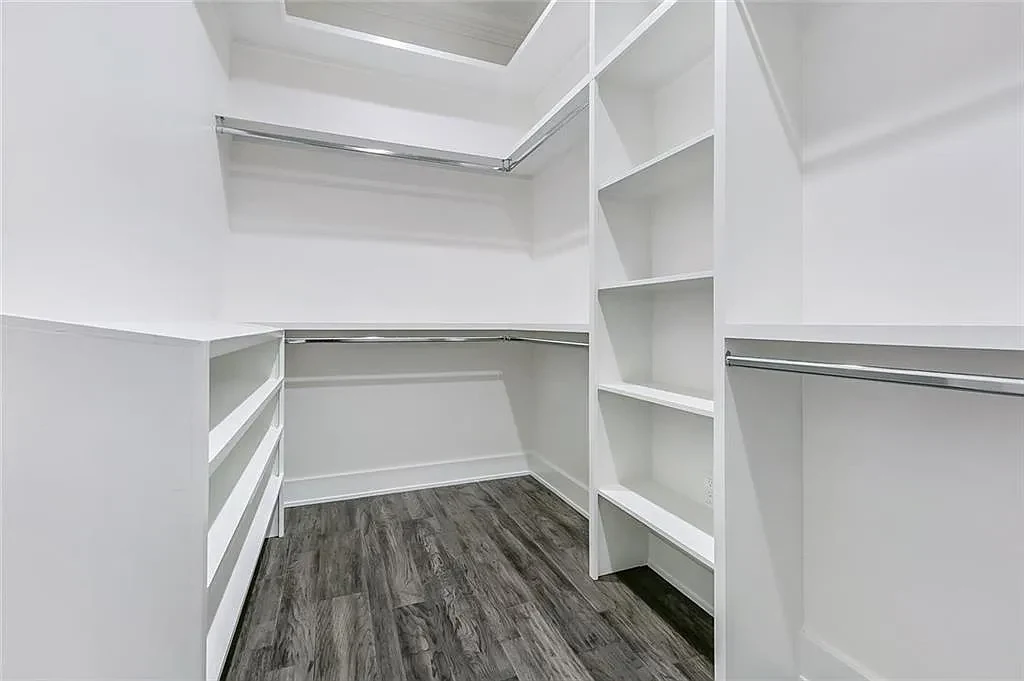
- Generous closets, with a walk-in closet in the primary bedroom.
- A real backyard, a place to cook out and for kids and dogs to play, not a leftover strip of grass.
What this means if you want to build
The same method works when the house is yours from day one. Whether you are building a custom home or a home to sell, we start with the lot and the market, size the house to the neighborhood, build it to pass every inspection and finish it with what buyers actually notice. If you have a lot, or are looking for one, request a proposal and we will run the numbers with you.
See finished work on our custom home builder in New Orleans page.