
We build inside
the Vieux Carré.
Renovating a protected building in the French Quarter is not ordinary construction. Every exterior decision goes through the Vieux Carré Commission before a single board comes off. We have done it, on a building that was already mid-construction when we got there.
Old buildings, current code.
A 19th-century masonry building has to end up meeting today’s life-safety, mechanical and elevation requirements without losing what makes it worth saving. That is the whole job.
Structural Assessment & Repair
Masonry, framing and foundations that are a century old get evaluated before anything new goes on top of them.
Full MEP Replacement
Plumbing, electrical and central HVAC run through walls that were never designed to carry them.
Regulated Exteriors
Galleries, windows, millwork, roofing and paint — all of it reviewed and approved before it is ordered.
Taking Over Mid-Project
We have stepped into a job already underway, assessed what was in place, and finished it.
What the Vieux Carré Commission actually requires.
Most owners find this out the hard way. Here is how it really works, so you can plan around it instead of being surprised by it.
All exterior work needs a VCC permit — not just what shows from the street
Restoration, alteration, demolition, new construction, painting, paving, fencing, roofing, weatherboard replacement. If it is on the outside of the building, it is reviewed. Interior work is reviewed too when it touches structure or affects the exterior.
There are three levels of review, and they move at different speeds
Ordinary maintenance and repair that conforms to the design guidelines can be approved by staff, typically in two to seven working days. Anything outside staff authority goes to the Architectural Committee, which meets twice a month. Work the Committee cannot settle goes to the full Commission at its monthly public hearing. Each step is a real calendar, and it is not yours.
Do not buy materials before the permit is in your hand
This is the VCC’s own advice, and it is the most expensive lesson on a historic job. Millwork, lighting, roofing, signage — if it is purchased before the signed permit exists and the approval comes back different, that money is gone. We order behind approvals, not ahead of them.
VCC approval is not a building permit
They are two separate things. Work that also needs a building permit does not start until that permit is issued as well, even with the VCC approval already signed.
Process summarized from the Vieux Carré Commission’s published application guidance. Requirements change — confirm current rules with the VCC for your property.
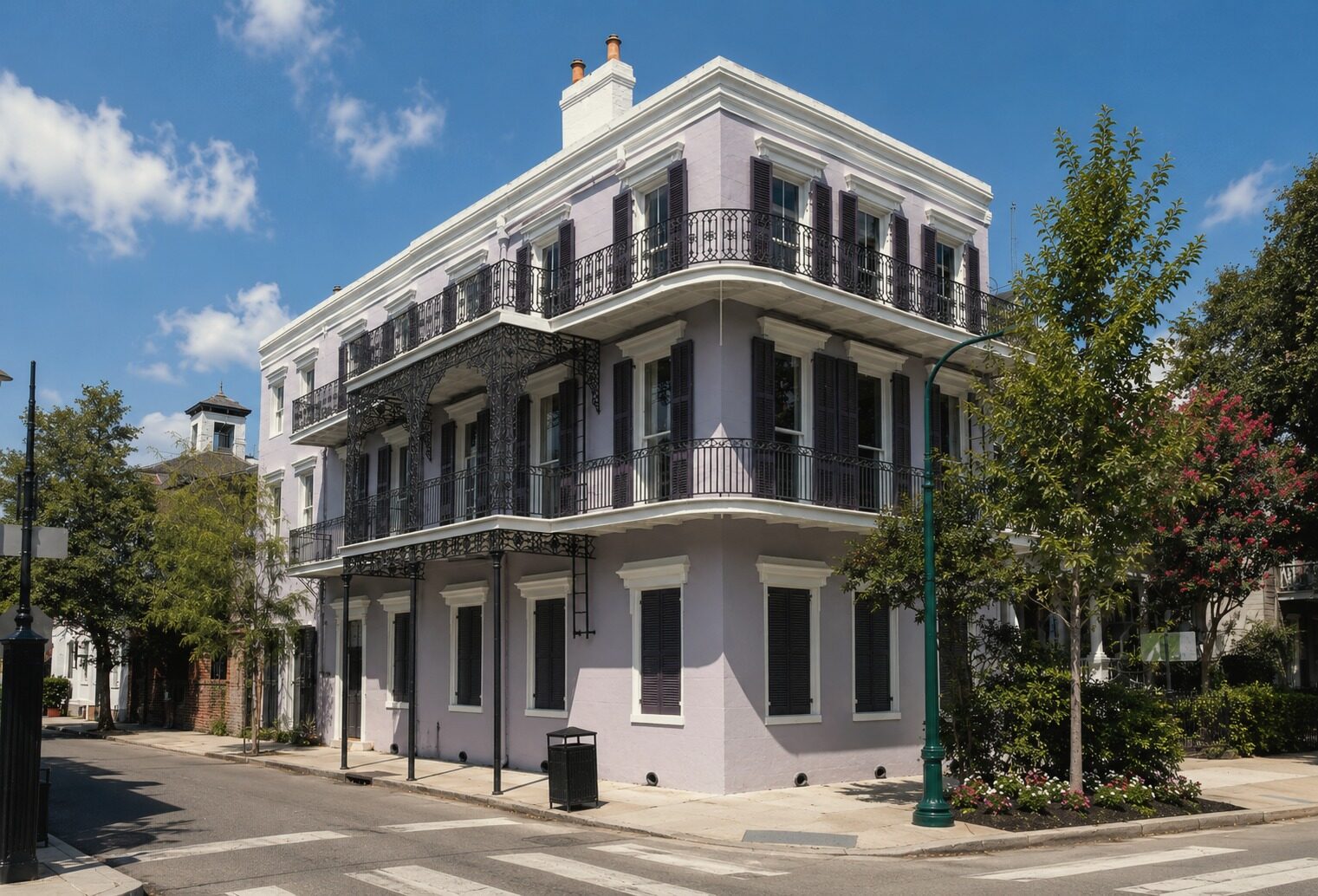
1002 Esplanade Avenue
A 19th-century masonry building at the corner of Esplanade and Burgundy — three levels, roughly 5,150 square feet, converted to five units.
We did not start this one
We came in by referral, mid-construction, after the owner changed contractors. That meant inheriting work already in place on a protected 19th-century building and assessing all of it before anything new could go on top. Two of the smaller units were listed as complete. They were not — both needed substantial work before they could be delivered, and we finished them.
Nine to ten months
Some of that was delay outside our control, which is what a historic building with a project already in motion tends to produce. What did not move was the scope we committed to or the contract we signed.
Why this one is worth reading
If you are choosing a contractor for a protected building, the useful question is not whether someone can build when everything goes right. It is what happens when the job is already behind, the previous work is in question, and the commission calendar does not care. That is the job we took, and the building was delivered.
Building
19th-century masonry, three levels, approx. 5,150 sq ft
Result
Converted to five units
Jurisdiction
Vieux Carré Commission
Duration
Nine to ten months, taken over mid-construction
Scope: structural assessment and repair · full plumbing and electrical · central HVAC throughout · finishes · completion of units left unfinished by others.
Historic work is one part of what we do. We also handle residential construction and full renovations, commercial build-outs, and FORTIFIED™ roofing across Greater New Orleans.
Have a building in the Quarter?
Licensed, insured, and 14 years in Greater New Orleans. LA RES 883334 · COMM 63084 · BBB A+. Bring us the drawings, or the mess someone else left.
Licensed statewide in Louisiana — and in Mississippi.
Custom homes, whole-home renovations and additions across Greater New Orleans and the Northshore — and an active build in Mississippi.